
Understanding the Lymphatic System
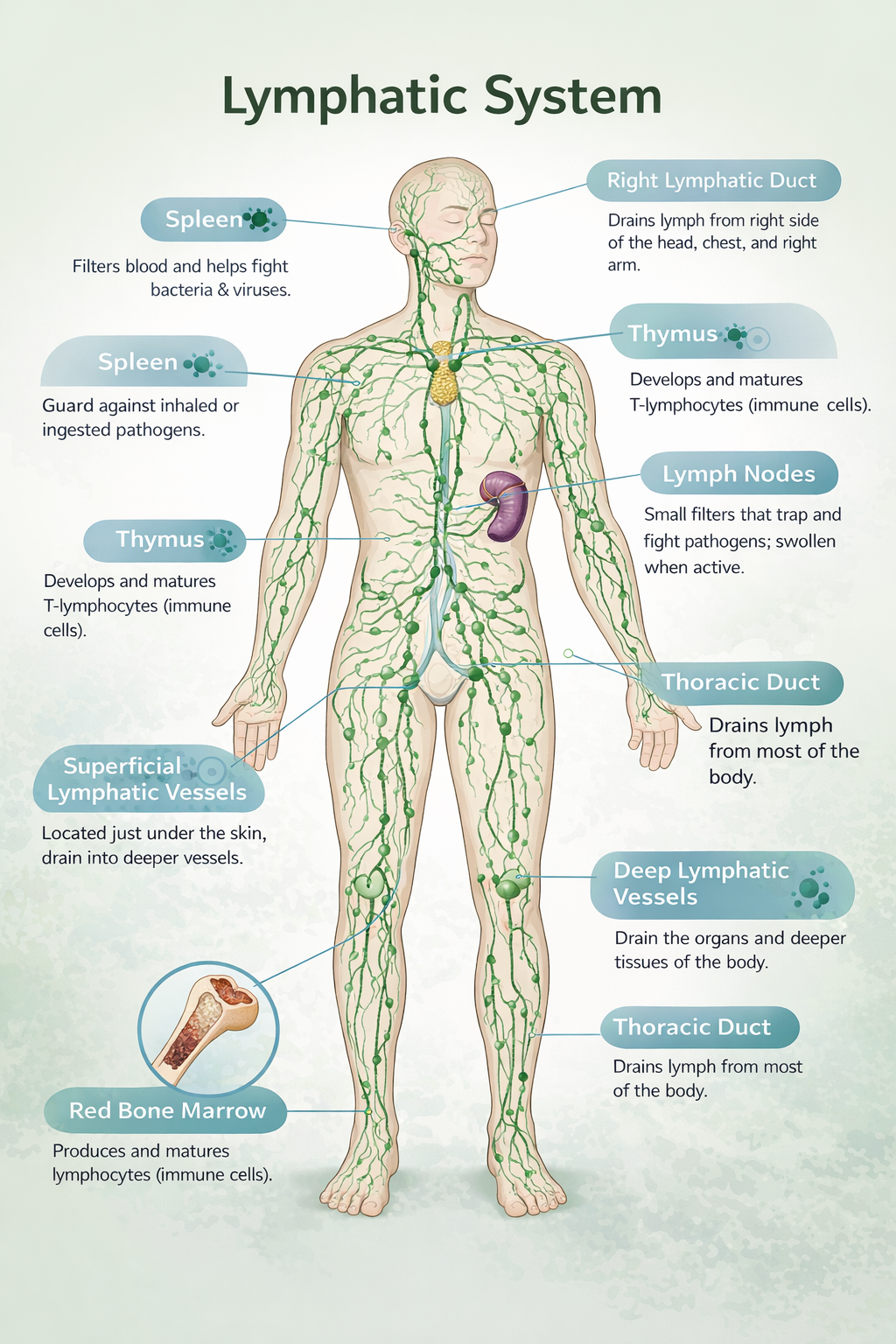
The lymphatic system is an essential part of the body’s circulatory and immune systems. It is responsible for collecting excess fluid, waste products, and toxins from body tissues, filtering them through lymph nodes, and returning the fluid back to the bloodstream.
In addition to maintaining healthy fluid balance, the lymphatic system plays a critical role in immune defence, helping the body identify and fight infections, inflammation, and disease.
Unlike the blood circulation system, the lymphatic system does not have a pump like the heart. Instead, it relies on gentle muscle movement, breathing, and manual techniques—such as Manual Lymphatic Drainage (MLD)—to keep lymph fluid moving effectively.
What Is Lymph?
What Is Lymph?
Lymph is a clear to pale yellow fluid that forms when fluid leaks out of blood capillaries into surrounding tissues. Around 10% of blood plasma becomes lymph fluid.
Lymph is made up of:
-
Approximately 95% water
-
Proteins
-
Fats and lipids
-
Glucose
-
Electrolytes
-
Immune cells (mainly lymphocytes)
Lymph produced in the digestive system—known as chyle—is especially rich in fats.
On average, the human body produces 3–4 litres of lymph fluid per day, though this can increase during illness, inflammation, or after surgery.
Lymphatic Organs
Several organs contain lymphatic tissue and play a vital role in immune function and blood filtration.
Spleen
The spleen acts as a blood filter, removing old or damaged red blood cells and supporting immune responses by detecting pathogens in the bloodstream.
Thymus
The thymus is responsible for the development and maturation of T lymphocyte (T-cell) immune cells, which are essential for adaptive immunity.
Red Bone Marrow
Red bone marrow produces and matures lymphocytes, similar to the thymus, and is essential for ongoing immune cell production.
Additional lymphatic tissue is also found in:
-
Tonsils
-
Appendix
-
Walls of the gastrointestinal tract
These areas provide extra immune protection, particularly at common entry points for pathogens.
Lymph Nodes
Lymph nodes are small, kidney-shaped structures that filter lymph fluid and help protect the body from infection.
An adult typically has 400–450 lymph nodes, with many concentrated in the:
-
Neck
-
Armpits
-
Groin
-
Abdomen
Each lymph node contains:
-
T lymphocytes
-
B lymphocytes
-
Macrophages and other immune cells
As lymph fluid passes through a node, immune cells scan for bacteria, viruses, and other foreign substances. When an infection is present, lymph nodes may become swollen or tender, which is why they are often palpable during illness.
Lymph enters nodes through afferent lymphatic vessels and exits through efferent vessels, after being filtered.
Lymphatic Vessels
Lymphatic vessels transport lymph fluid throughout the body and eventually return it to the bloodstream.
There are two main types:
Superficial Lymphatic Vessels
-
Located just beneath the skin
-
Often follow the path of veins
-
Drain into deeper lymphatic vessels
Deep Lymphatic Vessels
-
Drain deeper tissues and internal organs
-
Usually travel alongside major arteries
Lymphatic vessels begin as tiny, blind-ended capillaries in tissues. These gradually merge into larger vessels that pass through multiple lymph nodes before draining into larger collecting vessels called lymphatic trunks.
Major Lymphatic Ducts
Eventually, lymph fluid is returned to the bloodstream through two main ducts:
Right Lymphatic Duct
Drains lymph from:
-
Right side of the head and neck
-
Right side of the chest
-
Right upper limb
Thoracic Duct
The thoracic duct is the largest lymphatic vessel and drains lymph from the rest of the body, including both lower limbs and the left side of the upper body.
Both ducts empty lymph into the bloodstream at the subclavian veins, allowing filtered fluid to re-enter circulation.
Why the Lymphatic System Matters
When the lymphatic system is functioning well, it supports:
-
Healthy immune responses
-
Reduced inflammation
-
Efficient removal of waste and toxins
-
Balanced fluid levels in tissues
When lymph flow is impaired—due to surgery, illness, injury, or inactivity—it can lead to:
-
Swelling (oedema or lymphoedema)
-
Heaviness or discomfort
-
Reduced healing
-
Increased infection risk
Supporting Lymphatic Health
Gentle movement, deep breathing, hydration, and Manual Lymphatic Drainage (MLD) can help support healthy lymph flow. MLD is a specialised technique designed to stimulate lymphatic circulation safely and effectively, particularly for individuals recovering from surgery, managing lymphoedema, or seeking overall wellbeing support.